











Harbor & Home: A Review of an Exhibition and Its Catalog

Harbor & Home: Furniture of Southeastern Massachusetts, 1710-1850. Brock Jobe, Gary R. Sullivan, and Jack OBrien. University Press of New England, 2009, 456 pages, hardbound, $75 plus shipping/handling from University Press of New England, Order Dept., One Court Street, Lebanon, NH 03766; (800) 421-1561; Web site (www.upne.com). It is also available at Winterthurs bookstore, (800) 448-3883. The exhibition will be on view at Winterthur Museum & Country Estate (www.winterthur.org) in Delaware through May 25. It then travels to Nantucket, Massachusetts, where it will be on view at the Nantucket Historical Associations Whaling Museum (www.nha.org) from July 3 until November 2. 
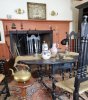
A section of the exhibit shows how chairs and clock cases were made. There is a video showing Alan Breed making a clock case and Dan Santos making a Windsor chair. An exploded clock and Nantucket Windsor allow visitors to see how the parts fit together. Solis-Cohen photo. 
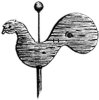
This mahogany tall-case clock with rocking ship movement, made in 1819 for Thomas Figures Norfleet of Bertie County, North Carolina, by John Bailey III (John Bailey Jr.) of Hanover, Massachusetts, is in the exhibition but not in the catalog. It was found after the catalog had gone to press. According to the catalog, John Bailey III spent several winters in North Carolina and advertised in the Edenton Gazette that he intended to carry on a clock and watch repair business there for a few weeks and that he had a few clocks and timepieces for sale. In the catalog Sullivan described Baileys export and barter business, and the clock is proof of his coastal trade. Private collection. Photo by Matthew J. Buckley. |
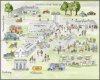
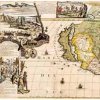
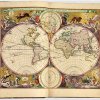
Winterthur Museum & Country Estate, Winterthur, Delaware by Lita Solis-Cohen Photos courtesy Winterthur For the last five years Brock Jobe, professor of decorative arts at Winterthur, and several cohorts have been investigating the cultural history of southeastern Massachusetts. The result is a book and exhibition, Harbor & Home: Furniture of Southeastern Massachusetts, 1710-1850, to commemorate this pioneer regional study of a section of New England about the size of Delaware. Using furniture and other artifacts, diaries, and account books, the study introduces us to the men who made their living in seafaring commerce and to the craftsmen of the region who met their modest needs. We get a picture of life in a forbidding part of the world, not hospitable to farming and away from the mainstream style centers of Colonial and Federal New England (Newport and Boston). By identifying and documenting the furniture, we can now attribute examples previously cataloged as Newport, Boston, Connecticut, or simply New England. Most of what Jobe and company found was pedestrian, but there were pockets of creative activity in this region. Some works of high merit, such as the legendary Taunton chests, made in the 1720's, and clocks, both tall-case and dwarf, stand out among the largely retardataire provincial furniture made for local consumption. The exhibit, on view at Winterthur until May 25, takes us to the region south of Boston toward Providence and stretches all the way east to the sandy tip of Cape Cod to Provincetown and includes Nantucket and Martha's Vineyard. It covers five counties: Barnstable, Bristol, Plymouth, Nantucket, and Dukes. The accompanying book by Brock Jobe, Gary R. Sullivan, and Jack O'Brien documents and illustrates the furniture and provides a census of the craftsmen. Since 1952, the Winterthur Program in American Material Culture at the University of Delaware has granted master of arts degrees in early American culture. In the early days, cultural history seemed to be synonymous with art history. Joseph Downs and Charles Montgomery, the first two professors, focused on the stylistic and formal analysis of furniture and investigated the most gifted cabinetmakers in the style centers, noting their contributions to the lifestyle of the rich merchants and yeoman farmers. Guided by the keen eye of Henry Francis du Pont (1880-1969), they looked for the art in every object and as a result published about 10% of what was made in America during the Colonial and Federal periods. In contrast, Jobe is concerned with context. His exhibition and book conjure a reality show. The masterpieces in this exhibition, and there are a few, were made in Boston and owned by the merchant mariners who made their fortunes in whaling, fishing, and trading. The tall clocks, dwarf clocks, and shelf clocks are the most impressive of the regional works. The furniture, influenced by either Boston or Newport (or in the case of some Windsor chairs, Philadelphia, and in the Federal era by imports from New York), was functional and demonstrates the longevity of 18th- and 19th-century styles. Occasionally a chest of drawers had inventive decoration. For example, there are the 30 known Taunton chests made and decorated by Robert Crosman as if they were needlework in the first quarter of the 18th century. Another example is a blanket chest with an exuberant fern-like design in paint sponged on the surface, made 100 years later in Eastham. The chests-on-chests by the Allen brothers of New Bedford could at first glance be taken for Newport work. The Allens were nephews of John Goddard, and Ebenezer, the elder, was apprenticed to his uncle and trained his younger brother Cornelius. A lady's writing desk, flamboyant with burlwoods and labeled by the New Bedford cabinetmaker Reuben Swift, 1802-07, was lent by the Metropolitan Museum of Art. It is the only loan from a major museum. Half the loans came from local historical societies and the other half from private collectors, some of them dealers. With one exception, a Nantucket Windsor chair, the few objects in the exhibition collected by H.F. du Pont had been made in Boston and owned by the leading merchants in the region. This is not because the area had been so picked over by dealers that it was stripped, as Wallace Nutting lamented in 1928. Plenty was there still in private hands for Brock Jobe and his team to find, but most of the furniture made in southeastern Massachusetts did not rise to H.F. du Pont's standards of art and excellence. Jobe and company found 2000 pieces of furniture and chose 85 for the show and 106 for the catalog-and they are still finding more. It helps to read the catalog before seeing the show. Rereading it afterward is a bonus. The book/catalog is divided into introductory essays, catalog entries, and an appendix listing 1059 furniture craftsmen. The first essay surveys the region and its furniture; the second essay examines the careers of six woodworkers who worked there; and the third essay explores the impact of clockmaker John Bailey and his family and apprentices. The exhibition begins with good maps and images of the region. A fireplace overmantel depicts Captain David Thacher's house in Yarmouth, one of the ports that dotted the coastline. His house is on the hill, his fishing schooners at anchor, and there are wooden platforms, called flakes, where the cod was dried and salted. Thacher shipped cod, the mainstay of New England, along the coast. It was a lucrative trade. In the exhibition's faux parlor stands a tall clock with a rocking ship and spouting whale on its dial, made in Amsterdam. It belonged to William Rotch, Nantucket's leading whaling merchant. He subsequently gave it to his daughter upon her marriage to his business partner Samuel Rodman. It is in the exhibition to show us that the rich owned some sophisticated furniture imported from Europe. Attesting to the importance of whaling to the region is an 1815-20 child's chair, possibly made at sea, of exotic woods, mother-of-pearl, whalebone, and baleen. Also probably made at sea is a small sea chest, attributed to Captain Richard G. Luce of Martha's Vineyard, 1830-50, of whalebone, baleen, mother-of-pearl, tortoiseshell, and exotic woods. These two pieces remind us of the work the sailors did in their quiet time aboard the whalers and represent a peripheral part of this regional study. A portrait of King Caesar (the nickname of Ezra Weston) attributed to Rufus Hathaway provides a glimpse of a local shipbuilder. A View of Mr. Joshua Winsor's House &c in Marshfield, 1783-95, also by Rufus Hathaway, shows Winsor's residence and counting house, his fleet of ships bobbing in the harbor, and his fish flake for drying the catch. Another faux interior suggests the parlor of a prosperous merchant and introduces James Warren and William Severtwo Harvard-educated friends who were prosperous merchants in the coastal trade. Warren married Mercy Otis, daughter of powerbroker James Otis of Barnstable, who had her portrait painted by John Singleton Copley. Sever married James Warren's sister Sarah. They furnished in the Boston taste. Sever owned an expensive turret-top tea table and a marble-top table. Sarah Sever stitched an elaborate needlework picture, worked in Boston in 1748; it's on view in its original walnut veneer and pine frame with brass candle arms. Warren had an oversize card table made to accommodate his wife's needlework, possibly made under supervision at Mrs. Hiller's school in Boston circa 1745. These high-style furnishings contrast with the simple Quaker interiors depicted in the watercolors Joseph Shoemaker Russell painted about 1812. Quakers Joseph Russell and William Rotch owned simple, practical slant-lid desks, made by local craftsmen with Rhode Island influence. "Simple" and "practical" describe most of southeastern Massachusetts furniture: sea chests, ladder-back chairs, some with added rockers, and Windsor chairs. The high fan-back brace-back armchairs from Nantucket (influenced by Philadelphia designs) are the most impressive chairs. Like the chests-on-chests and high chests with Boston, Newport, and New London (Connecticut) influences, they are provincial in form, proportion, and detail. Abiel White of Weymouth emerged from the study as one of the most successful cabinetmakers. He ran a shop from 1790 to 1826 and made 68 bureaus between 1804 and 1807, at least 44 of them with swelled fronts. He charged $12 for the basic model and $14 for the more embellished version. He trained in the shop of Boston cabinetmaker Stephen Badlam and never wavered from the Federal patterns he learned there. His son, Lemuel, and his apprentice, Jonathan Beals, opened a cabinet shop in Bridgewater and continued to produce similar forms. White's signature foot has a notch on its inside edge giving a hint of a spade foot. In addition to chests, Abiel White also made clock cases. An enlightening part of this show and catalog is the story of the thriving clock-making trade in southeastern Massachusetts, largely due to the talents of the Bailey family of Hanover. Of the 115 clockmakers documented in southeastern Massachusetts before 1850, a third were Baileys or trained by a Bailey. The most illustrious was John Bailey II, a Quaker lay preacher, abolitionist, inventor, and exceptional mechanic. His best-known apprentices were his son John Bailey III and Joshua Wilder of nearby Hingham. The portrait of John Bailey III in the exhibition and illustrated in the catalog was painted early in his career. Next to him is a French mantel clock, which suggests he dealt in imported wares. An ardent abolitionist, he lost his business because of his political principles and had to move to Lynn, Massachusetts, where he carried on with a jewelry and repair business. He died there in 1883 at age 96, the oldest resident of the town. Gary Sullivan's detailed catalog descriptions accompanying the photographs of each clock provide a course on connoisseurship. The clocks Jobe chose for the exhibition are some of the most noble and handsome Federal clock cases in America. In the Boston area after about 1800, shelf clocks became a popular alternative to larger, more expensive tall clocks. Joshua Wilder of Hingham, who made tall clocks and dwarf clocks, also made a shelf clock, which is in the exhibition. The exhibit label on the wall tells us that this chaste and satisfying design cost his neighbor $24, less than half the cost of a tall clock. In 1810 John Bailey II and his brother Calvin introduced dwarf clocks-a half-size, half-price version of a tall clock. Soon after that, Joshua Wilder and Reuben Tower added their refinements. These dwarf clocks, standing only about 4' high, are the result of the fight for market share by rural 19th-century clockmakers. With competition from inexpensive Connecticut-made wood-movement clocks and from Simon Willard's patented timepieces, the banjo clocks, which were restricted by the patent to the small circle of Willards and their apprentices, the southeastern Massachusetts clockmakers, along with cabinetmaker Abiel White, came up with a more affordable product than the outmoded and expensive tall-case clock that cost between $60 and $75. Although some dwarf clocks were made in other regions in the first few years of the 19th century, most were made on Boston's South Shore in Hanover and Hingham. The four dwarf clocks in the exhibitionone by John Bailey II, one by Reuben Tower, and two by Joshua Wilderare all in cases by Abiel White. The cases range from a painted pine example to an elegant mahogany clock with fretwork French feet and a complicated mechanism. The section on Nantucket and Martha's Vineyard reminds us that the height of the whaling industry was in the 1770's. Nearly 200 vessels and 2000 seamen were engaged in whaling. The waters between Nantucket and Cape Cod are treacherous. Vessels often ran aground. A visitor to Nantucket in 1760 observed that furniture there was useful rather than ornamental, and what remains bears this out. A high fan-back Windsor chair with bold turnings and a green-painted seat is one of the few items made in southeastern Massachusetts that was owned by H.F. du Pont. It is pictured on the dust jacket of Nancy Goyne Evans's seminal book American Windsor Chairs, published in 1996. The discovery in a barn on Martha's Vineyard of a burl-veneered dressing table, 1735-45, with a carved shell, its original brasses, and most of its veneer is proof of the participation of Boston cabinetmakers in the coastal trade. A Federal cylinder desk, signed in the top drawer "Nantucket/ April 16th 1808/ Heman Ellis," owes much to the work of John and Thomas Seymour, who in turn looked to Thomas Sheraton's design book. But instead of making a real cylinder desk with a cylinder that slides up along a track beneath the upper tier of drawers, he hinged the cylinder like a traditional slant-front lid. Ellis put a single large tulip on a meandering stem right in the center of the cylinder. He made a candlestand with a similar tulip in the center. Both of these provincial pieces are in the exhibition. The influence of Newport on furniture made in Bristol County is explored in chests, desks, tables, chairs, and clocks from the early 18th century through the Federal era. Styles lasted longer here than in big cities. Painted chests with bold feet and deeply curved skirts were first made in the mid-1700's, and Cape Cod craftsmen made them for at least another 100 years. In the 1860's the growth of the railroads curtailed coastal shipping and shipbuilding. The discovery of petroleum in Pennsylvania in 1859 diminished the whale oil trade of Nantucket and New Bedford. People went to work in the textile mills in Brockton, Fall River, and Taunton. This brought forth nostalgia for the good old days, and people began to preserve the relics of their forebears. By the 1830's, there was a local museum in Nantucket, and over the next 70 years many historical societies were founded. A remarkable photograph, taken shortly after the founding of the Nantucket Historical Society in 1894, reveals how quickly a collection was gathered. Cleverly, some of those relics pictured have been lent to the exhibition and are shown attached to the enlarged photograph. The exhibition and the catalog essay end with a photograph of a Cape Cod auction from a 1922 issue of The Magazine Antiques. It documents the fact that contents of early houses were dispersed to vacationers and dealers. It was the beginning of the antiques marketplace. Jobe tells how "antiques shops sprouted like stoplights along the two major roads, the Old Plymouth Highway from Boston to Cape Cod and what became Route 6 leading from Rhode Island through Fall River and New Bedford...." Scholarship has come a long way from that time. Harbor & Home should focus the attention of the more than one million yearly visitors to the region on the heritage of southeastern Massachusetts. Jobe and his colleagues have brought to light the names of Lemuel Tobey of Dartmouth, Simeon Doggett of Middleborough, Ebenezer Allen Jr. and Cornelius Allen of New Bedford, Abiel White of Weymouth, and Samuel Wing of Sandwich, documenting their work with account books, diaries, and their furniture. Sharon, Massachusetts, antiques dealer Gary Sullivan has written the history of clockmaking in the region, sorting out and documenting the story of the Baileys and their apprentices and fostering a new appreciation for their skills in movement making and the stateliness of their provincial cases. Originally published in the May 2009 issue of Maine Antique Digest. (c) 2009 Maine Antique Digest
Login or Register to post a Comment |