
















Dennis Holzman of Albany, New York
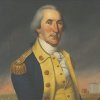
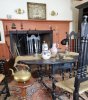
In the Trade by Frank Donegan What do you do when you graduate from college with a degree in 20th-century American poetry? Lots of people would tell you to prepare for that proverbial job at McDonald's. On the other hand, you could do what Dennis Holzman did and become an antiques dealer. Holzman's shop, on the second floor of a 19th-century commercial building a few blocks from the state capitol in Albany, New York, is the type of urban antiques shop that used to be abundant in American cities. It's a crowded, decidedly non-chic space of nooks and crannies where local history enthusiasts drop by to trade arcane bits of regional lore. No fancy presentation here. It's as close to being an old curiosity shop as you're likely to find these days. Holzman specializes in rare books and historical ephemera, but since he buys mostly from local homes, his shop also has a random cross section of whatever walks through the door. At any given time, in addition to the books, prints, autographs, photos, posters, pamphlets, and political buttons that compose his primary stock, you may also find a Windsor chair, a pewter coffeepot, a bust of Shakespeare, a Shaker box, a Fulper pot, an odd scientific device, Victorian jewelry, some portrait miniatures, or Chester A. Arthur's copy of Picturesque Europe. Don't, however, let the comfortable, old-fashioned atmosphere of this shop fool you. Holzman operates a complicated, multilayered business that exemplifies the sort of nimble, diversified strategy that allows a dealer to operate successfully in a changing marketplace. In addition to running the shop, he has several thousand books-valued from $20 to $10,000-listed on such Internet sites as Advanced Book Exchange (ABE), Alibris, Amazon, and Barnes & Noble. He runs tag sales and advises auctioneers. He has an active appraisal business. He consults for museums and collectors, and he does shows. "I have as many different colored eggs in my basket as possible," Holzman said. "Now, eighty percent of what I know is obtainable by anyone using some search engine. You have to operate in that twenty-percent margin where aesthetics, taste, and simple tactile sense can give you an advantage. It takes more work to make as much money as I used to." To help manage his many activities, Holzman has one full-time employee and several part-time ones. He also shares shop-tending duties and some space with Peter Scanlan, a now semiretired dealer in political ephemera who bears a remarkable resemblance to Teddy Roosevelt. Holzman grew up on Long Island, New York, got that poetry degree from the State University of New York at Stony Brook, and landed in Albany, as he said, "following a woman." It was the early 1970's, and the row-house neighborhoods of downtown Albany, especially the charming Central Square area just west of Nelson Rockefeller's futuristic Empire State Plaza, were gentrifying. "I had a non-marketable degree, but I had restoration skills that I learned from my construction engineer father," Holzman said. This was a time when abandoned brownstones in Albany cost less than $10,000. Holzman worked for speculators, who were gutting and rehabbing them. "These houses were full of stuff," he said. "People had simply abandoned them. The speculators just wanted them emptied, and I had a dump truck. There would be trunks of letters and photographs. I'd end up knowing the entire histories of these families." Holzman, who had hated history in school, found he loved working with the primary sources of history. He also found that, after a while, he was making money from the debris. (Although not so much yet that he could give up his other jobs of grant writing for the city and teaching poetry workshops at local jails, schools, and libraries.) He took courses at the New York State Historical Association program in Cooperstown, opened a shop, moved a couple of times, and ended up at his present location 19 years ago. As so many dealers of a certain age, he remembers that era fondly. "I used to go to all the little shopping-mall antiques shows and buy wonderful stuff. I bought an Edward Curtis Indian orotone for thirty-five dollars and sold it at Christie's for thirty-five hundred." Of course, there's the inevitable garage sale story. "I bought a pair of Paul Revere tablespoons at a garage sale. I used them at my meager meals to serve guests who never knew what they were." He said he eventually sold them for what amounted to a year's worth of mortgage payments. (That's what's so seductive about this business. You make a score when you're young and spend the rest of your life looking for the next one.) In discussing today's market, Holzman noted that the very fact that the Internet gives amateurs access to information complicates the process of buying from them. He said he is frequently faced with people who misinterpret the information they find on line and vastly overvalue their material. He said, "I had people in here yesterday who went on line and said they found their book was worth a thousand dollars. I looked at it and said, 'It's a thirty-five-dollar book.' But they insisted, so we went to the site, and they showed me the listing. They had neglected to note that the thousand-dollar book was a presentation copy with a fine leather binding, while theirs was a standard trade copy." Holzman said the Internet has put severe pressure on what used to be the meat and potatoes of the book trade. "The book business has become really difficult," he explained. "You could always sell interesting, but relatively common, books in the twenty- to thirty-five-dollar range to your local market. But now you have people who don't do this for a livingmaybe they're just cleaning out their houseand they may sell them for one and two dollars." The supply is further increased by some nonprofit organizations that receive books as donations and dump huge numbers of them on line. He said, however, that the upper end of the rare book market has remained relatively stable in the face of on-line competition. When things are truly rare, they're rare everywhere, even in cyberspace. He said the most active on-line sites for rare books are ABE and Alibris. Holzman's shop is a regular stop for dealers who specialize in all sorts of things. "I have a long-standing wholesale business," he said. "Most of this stuff comes directly out of homes, so it's attractive to the dealer crowd. I have a pretty strong business, for example, selling paintings and silver." He is also a primary source for those who want historical material pertaining to New York's capital region. He has strong ties to such local institutions as the New York State Museum and the Albany Institute of History and Art and also sells regularly to local history buffs. He said, "I just had a guy in here who's decorating his office and wanted visuals related to the history of Albany." Holzman has reentered the auction business as well. Some years ago he and Westchester dealer Eric Caren operated an ephemera auction venture. Now they've hooked up with Hudson Valley auctioneer Jay M. Werbalowsky to produce what they hope will be significant auctions in that field. Werbalowsky's JMW Auction Services has held regular ephemera sales. Holzman said, "We're helping him to gather quality consignments." Their first sale, scheduled for October, will include items signed by James Madison, James Monroe, John Adams, Teddy Roosevelt, Alexander Hamilton, Aaron Burr, Charles Lindbergh, and Alexander Graham Bell. There will be a rare John Burroughs manuscript, an 1811 ship's log, and a songbook from the 1860 Abraham Lincoln campaign. There will also be a copy of the famous James Montgomery Flagg "I Want You" recruiting poster; a 1766 Philadelphia imprint of an antislavery tract; photographs of Helen Keller and Pablo Picasso; and a "Votes for Women" stickpin. Holzman is ambivalent about today's antiques market. "Are we an inbred business? Are we consuming ourselves?" he asked. "There always used to be a customer for the person holding the hot potato at the end, but that's not true any more." In the meantime, he will tend the many eggs in his basket and hope for the best. For more information, contact Dennis Holzman at 240 Washington Avenue, Albany, NY 12210; (518) 449-5414; Web site (www.holzmanantiques.com). His hours are Monday through Friday, 11 a.m. to 5 p.m., and Saturdays by appointment.
Login or Register to post a Comment |