













See All Ads

Autumn Auction of 20th- and 21st-Century Design

Lita Solis-Cohen | October 26th, 2012


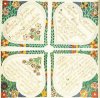
Frederick Hurten Rhead’s 20¾" square four-part tile panel with a peacock is one of two such panels that were a gift from Rhead to his friend, and Weller Pottery colleague, Levi Burgess for his Zanesville, Ohio, house. They were installed facing each other. This one was removed from the house by a woman who drove it to Lambertville, New Jersey, and asked David Rago to sell it (apparently, her ex-husband has the other one).

Marked “Frederick H. Rhead, U.C. 1910,” it sold on the phone for $637,500 (est. $35,000/45,000) because two collectors with deep pockets wanted it. The price for the peacock panel is a record for art pottery, topping the $516,000 paid by Rudy Ciccarello for a Frederick Rhead vase at Rago in 2007.

Frederick Rhead worked for several Ohio potteries before moving to University City, Missouri, where he was part of the short-lived ceramics department at People’s University, working there with American ceramicist Adelaide Alsop Robineau and French ceramicist Taxile Doat from Sèvres. It was a period of experimentation and creativity, and Rhead experimented with incised line filled in with colored slip. He moved to California in 1911, returned to Ohio in 1913, and later worked for the Homer Laughlin China Company, where he is credited with creating Fiesta dinnerware.

Tiffany Studios rare tall floriform vase with wheel-carved lilies, New York City, 1918, marked “LCT 4949M,” 13½" x 5", $100,000 (est. $5000/7000) to a phone bidder, underbid by a young collector in the salesroom accompanied by his parents, his wife, and his young children.


Rare George Ohr corseted teapot with two different glazes, 1890’s, stamped “G.E. OHR, Biloxi, Miss.,” 6¾" x 8", $46,875.

Vase carved with blue daisies on a yellow ground by Mary L. Yancey at Iowa State University, Ames, Iowa, 1920’s, stamped “Y” and “ISU / Ames,” 9¼" x 5", from the collection of author and dealer Ken Forster, $45,000 (est. $15,000/20,000). It was a record price for a pot from Iowa State, where Charles Binns and Paul Cox were part of the Department of Ceramic Engineering.


This English enameled copper and bronze triptych, In Praise of Womanhood, by Pre-Raphaelite artist Alexander Fisher, signed and dated 1901, 17½" x 22" x 4¾" open, was accompanied by a copy of Fisher’s “The Art of Enameling on Copper,” published in the London periodical The Studio in 1906. The lot sold for $40,625 (est. $14,000/19,000) to the most persistent of several phone bidders.


Chandelier from the Grove Park Inn, Asheville, North Carolina, 1913, designed by Victor Toothaker for Roycroft, with orb and cross mark, 14½" diameter, $11,875 (est. $4000/6000).

Rare Tiffany Studios earthenware milkweed vase, New York City, 1900’s, marked “P322 Tiffany Favrile Pottery LCT,” 10" x 4", $42,500 (est. $12,500/17,500).

Rago Arts and Auction Center, Lambertville, New Jersey

Photos courtesy Rago Arts and Auction Center

David Rago’s 20th- and 21st-century design auctions are jam-packed, like Bloomingdale’s before Christmas, unlike the more carefully curated high-end 20th-century design sales at Christie’s and Sotheby’s, which are more like Bergdorf’s—expensive and selective. The stylish design sales at Phillips de Pury & Company are the Barneys New York of this segment of the market, while the 20th-century decorative arts auctions at Bonhams are more like Lord & Taylor, offering a broad range at affordable prices.

Rago offered 1703 lots of 20th- and 21st-century design in three catalogs on Friday, Saturday, and Sunday, October 26, 27, and 28, 2012, to 143 bidders in the salesroom, 306 bidders on the phones, and a total of 2253 bidders on line. The successful ones spent a little more than $6.6 million (including buyers’ premiums) for 82% of what was offered in the three days. The salesroom was crowded for the Arts and Crafts offerings on Saturday, while a smaller crowd arrived on Sunday. Most of the action both days was on the phones and over the Internet.

A stunning $637,500 of the total came from the sale of a four-tile panel decorated with a peacock by Frederick Hurten Rhead. Florida collector Rudy Ciccarello outbid two other phone bidders and bought the panel for his Two Red Roses Foundation and the newly created charitable foundation The American Craftsman Museum. The museum is planned for the Tampa area.

The action began at noon on Friday when Rago put 347 lots of art pottery and art glass on the block. Some of it was offered one vase at a time, but most lots consisted of three to five vases. The Friday sale was expected to bring $217,300/318,250 and totaled $193,415.

On Saturday, the sale of the Christopher Forbes collection (see page 10-B) was expected to bring $345,200/501,700 for 132 lots and totaled $560,181. It was followed by a various-owners’ sale that included more art pottery and glass, plus some stylish Limbert furniture collected by Marilyn and Michael (1927-2012) Gould. For years, Marilyn ran successful antiques shows in Wilton, Connecticut, and she is now moving to Florida. Her shows are missed.

A large group of art pottery that came from the study collection of retired dealer and author Ken Forster performed well, bringing him a little less than a quarter of a million dollars. The various-owners’ sale (est. $1,405,300/1,991,950) was buoyed by the $637,500 Rhead peacock tiles and brought a total of $2,657,556. It was 85% sold by lot.

On Sunday 78% of the lots of modern furniture and decorations found buyers, for a total of $3,207,531 (see page 24-B). It took David Rago and Suzanne Perrault many hours on the podium, selling more than 80 lots an hour, to get through it all. The total for the weekend was over $6.6 million—Rago’s highest total since 2007.

“I take pride in selling anything from one hundred dollars to one hundred thousand or more,” said David Rago after the sale. “The big New York auction houses would have only taken two hundred to three hundred lots in this sale because they refuse any lots that might bring less than five thousand dollars. They just can’t afford to sell them in New York.”

Art pottery performed well. “Not every collector has room for another Stickley bookcase, but a lot of collectors have room for one more pot,” Rago said, and some of the pots were seductive.

The market for George Ohr pottery is strong. A rare corseted teapot with a mottled glaze, 6¾" high and stamped “G.E. Ohr, Biloxi, Miss,” sold for $46,875. A 6½" high George Ohr pitcher with a ribbon handle and an indigo and amber sponged glaze sold for $32,500, double its high estimate, and a smaller pitcher with a cutout handle and a sponged gunmetal and brown glaze sold for $15,000, twice its mid-estimate.

Tiffany pottery is rare. A 10" high glazed earthenware milkweed vase, made in the Tiffany workshops in New York City in the 1900’s (est. $12,500/17,500), sold for $42,500.

Some of the art pottery from the lifetime collection of Ken Forster sold very well, but some did not find buyers. Forster collected in order to write three books much needed by collectors, curators, and the trade: UND, University of North Dakota Pottery (2004), Alternative American Ceramics, 1870-1955 (2010), and Biographies in American Ceramic Art 1870-1970 (2010).

“Even though not every piece sold, I was pleased with the results,” Forster said on the phone after the sale. “I’m glad to get back my Rookwood, Newcomb, and Christopher Dresser that did not sell on Friday, but I am pleased indeed at the prices paid on Saturday for rare things that never come up, especially Iowa State and UND.” Forster said this was a trial run at Rago; he will send more for future sales and sell some of it at other regional auction houses. “I want to sell it all, but I know not to sell all at once. I think auction is the proper venue.”

Forster’s Iowa State vase, carved with blue daisies on a yellow ground, decorated by Mary Yancey and stamped “Y” and “ISU / Ames,” sold for $45,000 (est. $15,000/20,000). Forster said he paid around $17,000 for it ten or 12 years ago because he needed to illustrate it in his book.

In the catalog description for each piece, Rago listed the references in Forster’s books, including page numbers, but he did not have room to include the information on each piece of pottery and potter.

Among the items illustrated in Forster’s books that sold well was a 9" tall North Dakota School of Mines vase, decorated with apple blossoms on a dark blue ground, signed and titled by the artist, that sold for $22,500 (est. $5000/7000). A 7" square UND tile decorated with Art Nouveau trees in greens and brown, marked “HUF” and “H. Dreps May 1926,” sold for $11,250, and a 9" tall UND vase decorated with dark trees on a glossy blue ground brought $16,250 (est. $4000/6000).

There were vases by ceramicists important in the history of the craft. A signed and dated 8½" tall vase with a green and blue crystalline vase made by Charles F. Binns in Alfred, New York, 1929, went at $11,875, topping its $7500 high estimate. The only piece of porcelain by Adelaide Alsop Robineau that Forster ever owned, a 4½" tall cabinet vase with a celadon crystalline glaze, made in 1919 in Syracuse, New York, sold for $15,000 (est. $6000/8000).

Jerry Cohen, the Rago partner in charge of Arts and Crafts furniture, was also pleased with results. Pieces with good color and in good condition brought a premium. Most of the Limbert furniture from the Gould collection brought more than the modest estimates. A rare library table with side drawers and corbels to the floor sold for $5313, and a rare armchair with cane panels sold for $6250. A window seat with an appealing cutout design would have brought more than $3750 if it had a better surface, and a massive Limbert dining table with six 12" leaves, circa 1901, seemed to be a bargain at $6250. The middle market of Arts and Crafts furniture is a good value for those furnishing their living spaces; only the rarest early pieces, which are sold as art, bring big prices these days, and there are not many on the market.

The circa 1904 inlaid tall-back chair designed by Harvey Ellis for Gustav Stickley failed to sell even with a modest $11,000/15,000 estimate because it was restored years ago, and the restoration is not up to today’s standards. “It can be fixed,” said Cohen. A set of circa 1905 patinated wrought-iron Stickley fireplace tools that sold for $6875 might have brought more had the finish not been quite so clean.

There were two pieces of artistic furniture by Charles Rohlfs in the sale. A hall chair sold for $8125 and a log holder for $9375, both at the high ends of their expectations.

For more information, contact Rago Arts and Auction Center at (609) 397-9374; Web site (www.ragoarts.com).

Glazed redware figure of a square-dancing couple, 1938-39, incised “Mary Scheier,” 5¼" high, ex-Forster collection, pictured in Alternative American Ceramics, $5000 (est. $1000/1500). Scheier made the piece when she was working for the Works Progress Administration.

Early Van Briggle vase with bronzed handles, Colorado Springs, Colorado, 1903, incised “AA VAN BRIGGLE/ 228/ 1903/ III,” 11" x 5", exhibited at the 1904 Louisiana Purchase Exposition in St. Louis, $40,000 (est. $15,000/20,000). The “AA” is mark for Artus and Anne Van Briggle; the metalwork is by Yosakichi Asano.

Lalique opalescent glass “Bacchantes” vase, France, circa 1927, marked “R Lalique France,” 9½" x 8", $28,750 (est. $15,000/20,000).

Large vase with incised apple blossoms by Flora Huckfield and a student at the North Dakota School of Mines, Grand Forks, North Dakota, circa 1936, indigo stamp, artist signed and titled “Apple Blossoms,” 9" x 6", $22,500 (est. $5000/7000).

This rare 7" square tile with a landscape with trees, made by Hildegarde Fried at the North Dakota School of Mines, Grand Forks, North Dakota, marked “HUF” and “H. Dreps May 1926,” was Ken Forster’s favorite piece. “It is the ultimate Art Nouveau tile,” he said, and it’s pictured in his book UND, University of North Dakota Pottery. It sold for $11,250 (est. $5000/7500).


Originally published in the February 2013 issue of Maine Antique Digest. © 2013 Maine Antique Digest

comments powered by Disqus