












See All Ads

Cleveland Connection Attracts Collectors

Susan Emerson Nutter | October 20th, 2012

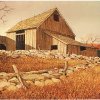
Clyde Singer (1908-1999), The Old Swimming Hole, 1937, oil on canvas, signed and dated lower left, 46" x 40¼", very good condition, $27,140. Exhibited: Clyde Singer’s America, Canton (Ohio) Museum of Art and Butler Institute of American Art, Youngstown, Ohio, 2008-09; Illusions of Eden: Visions of the Heartland, Columbus (Ohio) Museum of Art.

Carl Gaertner (1898-1952), Sunny Corners, 1926, oil on canvas, signed lower right, 16" x 20", very good condition, $11,800. Exhibited: The 8th Annual May Show, Cleveland (Ohio) Museum of Art, 1926.

Francis R. Hewitt (1936-1992), an untitled acrylic on masonite, circa 1965, very good condition, $11,210. Exhibited: CLE OP: Cleveland Op Art Pioneers, Cleveland (Ohio) Museum of Art, April 2011- February 2012.

Richard Pettibone (born 1938), Roy Lichtenstein Rouen Cathedral, 1969, acrylic and silkscreen on canvas, signed, titled, and dated on stretcher on reverse, 8" x 5¼", very good condition, $11,800 to a collector in California. Pettibone does miniature replicas after other artists, such as Lichtenstein, Stella, Warhol, etc. He started creating these works in the 1960’s, not long after the original artwork was created.

“I have had several of these over the years,” Davis explained, “because The New Gallery…carried Pettibone’s work in the sixties. This piece was consigned by a gentleman who bought the work at The New Gallery in the sixties. The New Gallery became the Cleveland Center for Contemporary Art and is now the Museum of Contemporary Art (MOCA) Cleveland, which just had the grand opening of its new museum.”

Shiko Munakata (Japanese, 1903-1975), Fish and Flower and Female Buddha, 1957, woodcut, signed and dated in pencil, edition of 250 plus ten artist’s proofs, Print Club of Cleveland publication No. 37, 12½" x 8 5/8", very good condition, $4720.

Rembrandt van Rijn (Dutch, 1606-1669), Man Drawing from a Cast, circa 1641, etching (Bartsch 130), collector’s stamp of Friedrich Kalle in blue on the reverse (Lugt 1021), 3 5/8" x 2½", ex-Brenda Fuchs estate, $5605.

After Pablo Picasso (Spanish, 1881-1973), After the Bacchanale, circa 1959, etching and aquatint in colors, signed and numbered 132/300 in pencil, 18¼" x 21½", ex-Brenda Fuchs estate, $10,620.

Rachel Davis Fine Arts, Cleveland, Ohio

by Susan Emerson Nutter

Photos courtesy Rachel Davis Fine Arts

It’s all about being in the right place at the right time. OK, it’s all about being able to get to a phone at the right time. Just ask Rachel Davis of Rachel Davis Fine Arts.

One of the featured items at her October 20, 2012, fine arts auction in Cleveland, Ohio, had the potential to do very well. Clyde Singer’s The Old Swimming Hole, a 1937 oil on canvas, had seen lots of presale interest, according to Davis. Consigned by the museum that had been its most recent home, it seemed to be an object of desire for collectors eager for the chance to claim ownership. Then it came up for bids.

“I felt the piece went cheap,” Davis said. The painting sold for $27,140 (including buyer’s premium). “We had three phone bidders who wanted to participate, but two were not able to be at their phones when we tried calling. That made the third phone bidder a very happy man.”

Such occurrences are not unheard of where auctions are concerned, and isn’t this what makes buying at auction so exciting? “Maybe, just maybe, it will be my turn to be that ‘third phone bidder’” is often the mindset and the catalyst behind taking the chance and placing a bid.

This October auction did see a lot of participation. The two absent phone bidders aside, more than 800 registered on-line bidders, 153 registered proxy and phone bidders, and 60 bidders in the room made for an active, though soft, event sales-wise.

“Total sales: hammer price was $355,000,” Davis said. “I felt the sale was a little soft. And I think this is still a reflection that the dealers aren’t buying for inventory as they have in the past. With that said, I felt the Cleveland school pieces did well.” She added that, “Prices stayed strong, and the great, fresh pieces to the market did well.”

One of those pieces was a 16" x 20" oil on canvas by Carl Gaertner, Sunny Corners. Sporting a full signature at lower right, the painting made $11,800.

“Years ago, I sold a very nice Gaertner that was consigned by the artist’s cousin,” Davis explained. “Back in June, the owner of Sunny Cornerscalled me and said, ‘You sold a painting for my brother. I also have a Gaertner.’ A few days later I got a box from Florida. It was a nice, early Gaertner—untouched.”

Another Gaertner painting, The Hudson at Albany,a watercolor on cardboard, signed lower right, sold for $10,620. “This piece came out of Massachusetts,” Davis said. “The strange part about the Cleveland items is most came from out of state. People have been contacting us saying they have inherited these piece from their parents, their grandparents, and now want to send them to Cleveland to sell, which is great,” she continued.

Another painting that came with an interesting story was a 1940 oil on canvas by William Joseph Eastman, Ghost Town, Central City. It sold for $5900.

According to Davis, “The Eastman was originally sold about ten years ago at a house sale.” She had helped the liquidator price the oil. The deceased owner had been a friend or relative of Eastman. “Now ten years later, the woman who bought it at the house sale is retiring to Florida, and she decided to sell it,” Davis explained, adding, “The competition for the Eastman was between the Clevelanders who wanted it because the painting is by a Cleveland artist and Colorado buyers because of the subject matter. It is staying in Cleveland.”

Cleveland collectors do gravitate to art by Cleveland school artists or works with connections to the city. Two woodcuts by Shiko Munakata were popular with participants. Fish and Flower and Female Buddha, a Print Club of Cleveland publication, No. 37, made $4720; signed and dated 1957, it was one from an edition of 250, plus ten artist’s proofs. Guatama and Bodhisattvas, a Print Club of Cleveland publication, No. 38, came in at $5310; signed and dated 1958, it too was one from an edition of 250, plus ten artist’s proofs.

A lithograph by Thomas Hart -Benton, Approaching Storm, was the Print Club of Cleveland’s publication No. 18. One from an edition of 190, plus ten artist’s proofs, it sold for $3186.

“All three of these came from an older gentleman who has been a longtime Print Club of Cleveland member,” said Davis. “These three prints are all earlier and are now hard-to-find Print Club prints. We always have people searching for these,” she added.

The Cleveland connection continued with After the Bacchanale, an etching and aquatint in colors after Pablo Picasso that sold for $10,620, It “came from the estate of Brenda Fuchs, a local Cleveland artist who passed away last year,” Davis said. “She was a very kind woman and good artist, and she had a very nice collection that her parents had bought. Fuchs’ father was a cellist in the Cleveland Orchestra.”

Davis also explained that the print is described as being “after Picasso” because he did not create the etching. Another artist created it after one of Picasso’s oil paintings, but Picasso authorized the publication and signed the print.

Another piece from the Fuchs estate was Man Drawing from a Cast(Bartsch 130), a circa 1641 etching by Rembrandt van Rijn. It had a collector’s stamp of Friedrich kalle in blue on the reverse and sold for $5605. Davis noted, “This Rembrandt was a nice early state.”

Then there were the Op Art pieces. Works by Edwin Mieczkowski continue to cause a stir, and the October auction saw it happen again. According to an article in (www.clevelandartsprize.org), “In 1959, when Abstract Expressionism was the rage, the then 29-year-old artist (born in 1929) and first-year instructor at the Cleveland Institute of Art (CIA) had quietly joined with a group of other young, mostly Cleveland-based artists who were interested in following their own shared interest in exploring the interplay of color, intensity and geometric forms and their effect on the perception of the viewer.

“Fame and material success, Miecz- kowski and his friends agreed, was not their goal. They called themselves the Anonima group. But just five years later, in 1964, they were being heralded by Time magazine as being the beginning of something called ‘Op Art,’ with Miecz- kowski’s mesmerizing Adele’s Class Ringas Exhibit A.”

Davis’s October sale saw Mieczkowski’s Main Study for “Iso Rungs,”a 30" x 30" acrylic on canvas laid to board, bring $5605. And, yes, this painting had an interesting story behind it.

“Recently, the Cleveland Artists Foundation did a show on Mieczkowski,” Davis explained. “A man who works for me part time was curating the show. A Dayton, Ohio, couple who deals mostly in pottery called to consign this piece. Main Study for ‘Iso Rungs’arrived at the gallery, and the next day Chris, the curator, came in and kind of yelped. He had been looking for this painting for his show. So the painting was able to be in the Cleveland Artists Foundation show over the summer, and then we sold it.” Interestingly, it sold to a collector in Montana.

In keeping with the Anonima theme, Davis offered an untitled gouache on paper by Ernst Benkert ($501.50) and a circa 1965 untitled acrylic on masonite by Francis R. Hewitt ($11,210) right after the Mieczkowski because these three artists had formed the Anonima group.

Concerning the Hewitt painting, Davis said, “This [acrylic] had recently been in the Cleveland Museum of Art CLE OPshow, and the couple who bought the Hewitt at our sale said they had attended that show.”

The couple later told Davis that when they saw the Hewitt on exhibit at CLE OP, they knew it was a painting they wanted to own. Unfortunately, the then owner of the Hewitt passed away while the show was still up at the museum.

“The owner had been a professor and very active at the Cleveland Institute of Art from the late fifties on,” Davis continued. “She was a personal friend of all three of the Anonima group.”

“Well, none of the owner’s children wanted the Hewitt, so we got it,” Davis said. “The purchasers were very surprised when they received our sale flier in the mail and saw the Hewitt.” And, yes, they were very happy to have the chance to acquire the painting.

Though Davis thought the company’s October auction was soft, one thing is certain. Interest in Cleveland-based artists continues. Whether they were born and raised, or schooled, or had an association with the city, their work is causing collectors to take a second look.

For more information, contact Rachel Davis Fine Arts at (216) 939-1190; Web site (www.racheldavisfinearts.com).

Thomas Hart Benton (1889-1975), Approaching Storm, 1938, lithograph (Fath 25), signed in pencil, edition of 190 plus ten artist’s proofs, Print Club of Cleveland publication No. 18, 9¾" x 12¾", $3186.

Edwin Mieczkowski (born 1929), Main Study for “Iso Rungs,” acrylic on canvas laid to board, 30" x 30", $5605.

Carl Gaertner (1898-1952), The Hudson at Albany, 1952, watercolor on cardboard, signed and dated lower right and signed, titled, and numbered 292 on reverse, 18" x 30", very good condition, $10,620. Exhibited: The 34th Annual May Show, Cleveland (Ohio) Museum of Art, 1952.

Alfred Hutty (1877-1954), Charleston Markets #2, drypoint, signed with snail remarque in pencil, 6¾" x 9¼", $3422. “Alfred Hutty was one of the founding members of the Charleston Etchers’ Club,” Davis said.

William Aiken Walker (1838-1921), Man in Cotton Field, oil on panel, signed lower right, 12" x 6", very good condition, ex-Brenda Fuchs estate, $8850. “William Aiken Walker is primarily known for his impressions of plantations, cotton fields, African-American sharecroppers, and dock scenes depicting the cotton culture,” according to Davis.


Originally published in the February 2013 issue of Maine Antique Digest. © 2013 Maine Antique Digest

comments powered by Disqus