













See All Ads

Deaccessioning

Isabelle Douglas Seggerman | January 14th, 2013

Opinion

Deaccessioning

by Isabelle Douglas Seggerman

Through all of my life I have been acquiring. As a child I collected Ginny dolls, then Toni and Madame Alexander dolls. When I was a teenager I accumulated clothes, beaux, Lester Lanin beanies, and sailing trophies. During college, my collections revolved around good art and art history books and more beaux.

After college, I cherished and counted the number of entrance and exit stamps on my passport. I traveled to Europe at any given opportunity. In London, I would buy little bits of silver on Portobello Road. When in Barcelona, I wandered Las Ramblas looking for bargains. In Budapest, I searched the markets for paintings.

When my first husband was transferred to England by his firm for a year, the exchange rate happened to be to our advantage. I haunted the London galleries and antiques shops during the week. I studied, read, and learned a great deal from the dealers I met. On the weekends we would rent a car and head out into the countryside searching for good early Queen Anne and William and Mary style furniture. (After our divorce three years later, he got the English furniture, but I had gained the knowledge.)

During my second marriage, my new husband became the catalyst that propelled me into the art and antiques business. He loved to attend auctions and to buy. He considered himself a collector, while I considered him more of an accumulator! In order to keep some semblance of order and space in our house, as well as some money in the checkbook, I began to sell many of his acquisitions.

Fred enjoyed the thrill of the chase and the conquest of his object of desire. After a purchase, it would be deposited on a table in the house. A painting or antique map might languish against a wall in his office, while a rug might lie rolled up in the corner of our living room for a few weeks. Then I would go into action. Each new acquisition would be inventoried, repaired if necessary, and sold. This system worked well. Fred would get his purchase price back, plus 10% interest, while the balance was plowed back into the business. Fred made more with me than he had with his stockbroker over the years.

I opened my first art and antiques shop in the village of Essex, Connecticut. Business was brisk during the 1980's. We had a good thing going. Fred would buy, and I would research, restore, and sell. It was important that the antiques we offered were in their most presentable condition. This meant having the paintings cleaned and often reframed, the silver gleaming, and the furniture well polished. I did much of this preservation myself. Caring for these objects took a lot of time, effort, and expertise.

After about 20 years, I said to a well-known appraiser that I really did not care about material things. His response was, "For God's sake, don't tell your clients that!" On Bob Newell's advice, I continued to sell and emote over each piece when a customer appeared. I would look at a painting I was peddling with the utmost love and adoration in my eyes and offer as much verbal knowledge as possible to assure a person that she was buying the most precious object possible. I continued to nourish the inventory with wax and polish, believing that as the temporary caretaker of these things I had a responsibility to them.

I felt a loyalty to my inventory, if not a sentimentality toward it. If customers did not appreciate an item, even though it might have been in stock for over a year, I would not let it go. A valid business strategy in the antiques world is called "dumping"—if an object has not sold within a year, the piece should be consigned to auction and sold. The dealer cuts his losses, and the cash continues to flow. This concept has always been alien to my nature, so I hung on: stubborn and loyal.

After my 25th year with an open shop, I had met enough tire-kickers and rude day-trippers for a lifetime. I closed the store, converted a building on our property, and met with select customers by appointment only. This worked well, except for one small problem-storage space.

Paintings need a controlled environment. Heat will crackle a canvas, and moisture will fox a mat. Wood can stand more heat and humidity if the change comes gradually. Pottery generally needs to be wrapped in diapers and then stored tightly. I would place it in labeled Tupperware cartons; the safest place for the artworks was boxed in my house. Two of our four bedrooms became theirs.

This was all fine and dandy until we had houseguests. Then I would empty both rooms, drag everything into the large master bedroom, and keep the door closed until the visitors' departure. Moving everything took about three hours nonstop to accomplish. True to form, I remained loyal to the inventory and would not dump it. Our adult children understood; over the years they became used to my husband's and my quirks and eccentricities.

Over the years my daughter has asked me again and again, "Mom, if the house were to burn what would you try to save?" My response has always been the same: "The dogs and the family photo albums."

Lightning struck. I was tired of waxing and shining; the muscles in my back were stressed with the lugging and hauling. It was time to pass these objects on and find new good homes for them. They deserved a place to let them be seen, used, and enjoyed anew.

It was my time to deaccession. I chose a reputable New England auction house to handle the sale of the majority of my inventory. I had worked with this house before. Its paperwork and record keeping was excellent. Its experts knew their markets and gave honest estimates about the price each painting would fetch at auction. It also paid promptly after a sale. My choice was Eldred's on Cape Cod, Massachusetts.

Two of Eldred's experts came down to the house. We discussed what would sell well during the fall and what would be best to let go in the spring. We spoke the same language (not the emotive language used with retail customers). We looked at each piece objectively. Talk was straight and direct. I showed them a painting my daughter and I had bought in France. It was of a monkey holding a kitten in his arms while feeding it porridge. Their comment was, "You must have bought this one after lunch." They were here for about four and a half hours.

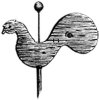
When Josh Eldred and Bill Bourne left, the two guestrooms had been cleared of art, and very little Tupperware-stored pottery remained. These pros also had found a sleeper. Bill showed an enormous amount of interest in some little wooden pieces on the mantel in the library. I explained that the 11 painted 1" duck carvings had belonged to my mother and that they were referred to as "little dust catchers." He asked if I wanted to sell. My response was, "Will it be worthwhile for me?" Bill quoted a value—which was ever so worthwhile. I then called my daughter at her office in New York to see if she had an attachment to them, since they had belonged to her grandmother.

My financially savvy daughter's response was, "How much?" The low range was quoted. Her answer, "Sell."

Josh and Bill left with the decoys in tow.

The keepers in my collection were easy to choose. These are the works that bring a special joy to me. The dog paintings that adorn my dining room walls have always brought a certain smile. Each of the paws is depicted in some state of hunger: one has his tongue touching his lips; the terrier has a bone in its mouth; while the pug, arrogantly sitting on a plush cushion, is waiting to be fed.

Since I am someone who always has loved beautiful things and has spent most of her life collecting, one might assume that this deaccession might have been hard. It wasn't. The burden of storing, insuring, and caring for these antiques had been an enormous weight on my shoulders. I will always love beauty, but now I can indulge myself in it on my own terms.


Originally published in the January 2013 issue of Maine Antique Digest. © 2012 Maine Antique Digest

comments powered by Disqus