











Plains Pictographs among Top Lots at Spotty Tribal Arts Sale

An 8½" x 7" bound book of 22 Native American pictographs in pencil, colored pencil, and ink sold to a phone bidder for $34,365. Doug Deihl said a collector bought it and added that it may end up in a museum someday. The images were mostly of mounted Brule Lakota Sioux warriors attacking Pawnee. Dating from 1881, they were said to have been drawn for Elizabeth K. Fales and Joseph W. Freeman in Deadwood, Black Hills, Dakota Territory. Apparently drawn by the same hand, the drawings have ink captions, e.g., Ring Thunder Running off Pawnee Ponies, Shooting Bear Killing Two Pawnee Squaws, and Bad Gun in style of armor for fighting Pawnee. A tintype of Fales and Freeman accompanied the lot. |
Skinner Inc., Boston, Massachusetts by Jeanne Schinto Photos courtesy Skinner The patchy, sluggish recovery of the economy resulted in a patchy, sluggish American Indian and ethnographic art sale at Skinner's Boston gallery on Saturday, September 26. A few top collectors have dropped out, leaving the pool of bidders sparsely populated. Those who remain already have large collections that don't require another bowl or basket. Many dealers are holding back, having become guardians of bulging inventories. Nor were sales encouraging at the 31st annual Invitational Antique Indian Art Show in Santa Fe, New Mexico, held five weeks before this auction. The outcome was a gross of $622,835 (including buyers' premiums) on 435 lots, 81% of which sold. In the old, relatively untroubled days of a few years ago, Skinner expected its departments to make at least $1 million per sale. Of course, dazzling items will usually bring good money, and an 1881 bound book of Brule Lakota pictographs well exceeded its expectations, selling to a phone bidder for $34,365 (est. $8000/ 12,000). Other exceptional Plains material that did fine included a rare three-blade gunstock club that made $35,550, and a beautifully designed pipe bag that fetched $21,330. Also successful were special items in various international tribal arts categories, among them a pre-Columbian carved limestone figure of a man in an elaborate headdress. Identified as Huastec from A.D. 1220-1500, the figure realized $29,625, despite its rough condition. Results were mixed on a highlighted group of Maori artifacts brought back to the United States from New Zealand by a Baptist missionary in 1886. A carved wood male figure, 30" tall, with a small but undeniable smile and much of its body covered by tattoo designs, was primed to be the headliner. In fact, it did sell to a phone bidder for $35,550, but the estimate of $30,000/50,000 revealed hopes for a grander outcome. Fairbrothers Maori carved wood tiki figure, 10" tall, sold to an absentee bidder for $11,258 (est. $3000/4000). It was judged by previewers to be the oldest Maori piece in the sale, dating pre-1850.
Despite its condition problems, including broken legs, bidders responded enthusiastically to this 51" tall pre-Columbian carved limestone figure of a man in an elaborate headdress. Identified as Huastec, Mexico, A.D. 1220-1500, it sold to one of several phone bidders for $29,625 (est. $6000/8000). The buyer was a European collector, said Doug Deihl.
|
Seven other Maori pieces from the Reverend Alfred Fairbrother's collectiona canoe bailer, four clubs, a spear, and an adz handlesold within estimates for prices ranging from $1067 to $5036. A pounder did not sell at all (est. $500/700). The only Fairbrother piece that did much better than expected was a small (under 12" tall) tiki figure that sold to an absentee bidder for $11,258 (est. $3000/4000). "The tiki figure was older than the rest, and that's what Maori collectors want," said department director Douglas Deihl. "That's what hurt the big figureit just wasn't old enough for most of these guys, although I think in the future they're going to regret not having gone after it, because historically it's important." In an introductory note in the catalog, Fairbrother's great-granddaughter Maida J. Minadeo wrote that the missionary had "lived in a small hand-made hut amongst a Maori tribe near Mt. Tarawera" until the 1886 eruption of a volcano that destroyed the entire village. "When my great-grandfather's time there was coming to a close," Minadeo continued, "the chief of the tribe bestowed upon him these beautiful authentic hand-carved idols, weapons, and tools." That may be true, but R.F. Keam's book Dissolving Dream: The Improbable Story of the First Baptist Maori Mission, published in 2004, states that Fairbrother (1853-1937) was a controversial figure in the village where he had gone to help with the Maori temperance movement initiated by a church in Auckland. Reportedly impatient with the Maoris' progress and quick to anger, Fairbrother resigned after some church members asked to have him removed. He remained in the area as an independent missionary/pastor until just a few days prior to the volcanic eruption, after which he helped with rescue and relief efforts before sailing for America with his affluent American-born wife, the widow of another missionary. According to an oral history of Martha's Vineyard posted on a Web site (http://history.vineyard.net/people.htm), Fairbrother resided after the turn of the century in Tisbury, Massachusetts. In 1979 Tisbury resident Stan Lair recalled: "Dr. Alfred Fairbrother
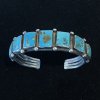
was always giving lectures on New Zealand. He traveled there once and I guess he had a few slides or whatever...And he lived right next to the old schoolyard. He wasn't too popular with the school children, 'cause they would hit their balls, and they would go over into his yard, and he wouldn't give them back...Nobody dared to go over there and get it, either. He must have had a pretty good collection of baseballs." Apparently more human than hero, Fairbrother was nonetheless a participant in an unprecedented mission for Baptists, who, following their first, fateful experience, did not refocus on Maoris until the 1950's. Besides the Fairbrother consignment, there were several other Maori items from unidentified sources. None fared well. A carved amber head was bought in at $375 (est. $400/600). A large (24" long) lidded oval treasure box didn't make it, either. Despite the six or seven phone lines reserved by bidders, none of them would go above $11,000, a figure just $1000 short of the reserve, said Deihl. Also passed was another, smaller treasure box (est. $3000/4000) that was missing its lid. The only piece from that group to sell was a 38" long club, which sold for $533 (est. $800/1200). "People are making bids on the two boxes now, wanting them for nothing," Deihl said four days after the sale. "But knowing the consignor, he'll just take them back. It's the economy that was the problem there, and those pieces are not going to get any less great in the future." Deihl added, "I've been getting many other requests on lesser items [in other categories], even from people who were at the sale. I'm not going to entertain them. I'm not interested in selling two-hundred-dollar items after the sale. It sends the wrong message. Some people do [sell lower-priced items] after their sales, but I don't." It is too bad more people didn't participate in this auction, where many pieces went at reasonable prices. They may not have been the best examples of their respective genres, but they had either charm or interest or could be considered good value. A framed silver gelatin print by T. Harmon Parkhurst (1883-1952) of a covered wagon moving along the Santa Fe trail at twilight sold to a phone bidder for $504. A 20th-century Amazon painted bark fiber mask from the estate of William S. Greenspon, an eclectic collector with a great eye, went to a room bidder at $385. An Internet bidder took a Fijian fiber and whale-tooth necklace for $612.50. The sale also featured one of the largest selections of Navajo jewelry ever offered by this department. It came from two collections and included bracelets, belts, rings, necklaces, and pins, no lot of which was estimated higher than $2000. Navajo silver and turquoise squash blossom necklaces fetched $830, $889, and $948. A Zuni example of the same type of neckwear brought $1896. Deihl pronounced them all "very wearable." "It wasn't a high-money sale, but it really reflected the times," Deihl concluded. "I don't take it personally." Meanwhile, there are a few pockets of the market that in general remain strong. Kachinas is one. At this sale six were offered. All sold. One with missing ears made $948; the most unusual one brought $7703. "They're sculptural and appeal to a much broader collecting base than some of the other things do," said Deihl. "And they're not common. It's pretty hard to find them. They just aren't seen on the market very often. Many of the good ones are in collections, and they don't come out, but I'm working on having more of them at my next sale," scheduled for May 2010. For more information, phone the Boston gallery at (617) 350-5400, the Marlborough facility at (508) 970-3100, or see the Web site (www.skinnerinc.com). Originally published in the December 2009 issue of Maine Antique Digest. (c) 2009 Maine Antique Digest
Login or Register to post a Comment |