














Boston's Art Show "Grows Legs," Opens Wallets

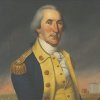
Carey Vose of Vose Galleries, Boston, posed on gala night with Harriot Drawing by Charles S. Hopkinson (1869-1962). The 63" x 26¾" oil on canvas, circa 1909, shows one of the artists daughters at about age five. Careys sister, Elizabeth Vose, said, Harriot is in a lot of Hopkinsons paintings. She was the cutest of his children, and her nickname was Happy. The price was $85,000. Vose, which has handled the Hopkinson estate since 1991, has since had two major shows of his work. Over the summer of 2009 Cape Ann Museum in Gloucester, Massachusetts, mounted a solo show for his work. Hopkinson painted loose, avantgarde watercolors but became known mostly for portraits, including of President Calvin Coolidge, an infant E.E. Cummings, and a series of over 50 Harvard presidents and faculty, earning him the title of court painter of Harvard. 
Head of an Italian Model by John Singer Sargent (1856-1925) was offered at $200,000 by J.M. Stringer Gallery, Bernardsville, New Jersey. Sargent rapidly painted the 18" x 13" oil on canvas for a student demonstration, said John Stringer, who is showing the paintings reverse with a portrait by Jessie Marion McConnell (1884-?), inscribed Painted by John S. Sargent while giving me a lesson at the Royal Academy Schools, Dec. 1905. Stringer said the double-sided piece is going into volume seven of the Sargent catalogue raisonné to be published by Yale University Press. |
Boston, Massachusetts by Jeanne Schinto It would be flippant to say, "Thirteen's the charm," but in the (baker's) dozen years since Tony Fusco and Robert Four cofounded the Boston International Fine Art Show, it seems finally to have become what the twosome always intendeda sophisticated, stimulating, and successful art fair for all of New England and beyond. The fact that this happened in such dire financial times was unexpected, to say the least. At the start of the most recent fair, held November 12-15, 2009, at Boston's Cyclorama, the dealers and the promoters seemed to be bracing themselves. Yet on Sunday afternoon, when we ventured to ask about results, we saw wide grins and heard about sales in nearly every booth. It shouldn't be forgotten that the show, which mixes traditional with contemporary galleries, was the brainchild of Fusco and Four plus oneJackie Sideli. She was their cofounder and co-promoter for the first four years and is now on the honorary committee. We have often run into her at the preview gala. At the preview this time, she was "tearing up a bit," nostalgic but also thrilled to see what the show has become. William Vareika of Newport, Rhode Island, sounded a melancholy note for a different reason. A show newcomer, Vareika got a call inviting him as an exhibitor here the day after the Ellis Antiques Show's cancellation was announced, he said. "In addition to meeting a lot of people I didn't know, I saw a lot of faces from my years at Ellis, and those years began right here in the Cyclorama." (More recently, the Ellis has been at The Castle in Boston's Back Bay neighborhood.) "So that's been nostalgic." (Vareika had also planned to do USArtists again, but that show was canceled as it prepared to move to its new venue, the Samuel M.V. Hamilton Building of the Pennsylvania Academy of the Fine Arts.) He paused, then added brightly, "This is a lovely show with lots of great art. I think people were impressed with a number of the things that we brought." Among those was a monumental Martin Johnson Heade seascape priced at $3 million. Any takers yet? He smiled. "There's been millions of dollars of interest." Tony Fusco acknowledged but underplayed the power of the 40-dealer roster's "new big guns." In addition to Vareika, Adelson Galleries and Arader Galleries, both of New York City, were there. "Most of our dealers were repeat dealers," he emphasized, naming Questroyal Fine Art, New York City; Avery Galleries, Bryn Mawr, Pennsylvania; Boston's Martha Richardson; and several of the contemporary art folks. "We have had our loyal core of really outstanding exhibitors for a number of years. It's just that when we have openings, we have an opportunity to refresh the show." Another way Fusco and Four keep the show fresh is by every year inviting a different nonprofit as the gala's beneficiary. This time it was the Handel and Haydn Society, the country's oldest continuously performing arts organization. The live music featured those composers, naturally, and while we can't say it was conducive to partying down, the attendees clearly had a good time. Maneuvering around the gala-goers (approximately 375 strong, by Fusco's count) required limber joints and sharp elbows, but along the way we managed to spot other luminaries besides Sideli. These included new host committee member Colleene Fesko, formerly of Skinner but now a private dealer and consultant; Robin S.R. Starr, who after being director pro tem of Skinner's paintings department for nine months has been appointed to that position as Fesko's replacement; two curators at the Museum of Fine Arts, Boston, Elliot Bostwick Davis and Erica Hirshler; and collector John Axelrod. "We also had a couple of major show promoters coming through over the weekend," Fusco said. They were Rick Friedman of the Hamptons Expo Group and Kris Charamonde of the Palm Beach Show Group. All told, the numbers through the door were tabulated at just over 3000, with about a third of them coming in during torrential rainstorms on Saturday. "There was a line waiting to get in. There's usually not a line on Saturday," said Fusco. "I got on the sound system to say, 'There are some staunch Bostonians waiting out there, so I'm opening the flood gates.' We were thrilled with the turnout." On our return visit Sunday, it seemed as crowded as it had been at the gala. Surveying the throng, one dealer said, "Remember how at shows on Sundays, we used to get out the bowling balls [to roll down the empty aisles]? One thing I think that's made a difference, besides the regular advertising, is the social-media networking that Tony and his staff have done. That's brought in the young people." Fusco said their Facebook site has nearly 500 fans. (In an aside he noted that social-media networking was scheduled to be a pertinent discussion topic at an upcoming meeting of the Professional Show Managers Association.) Fusco thought the show also "pulled in people from the Ellis, who would have gone to their own opening two weeks earlier, had it been." Showgoers saw a dazzling array that seemed to reflect dealers' impressions of what Bostonians and New Englanders like and are like. "The idea of customizing a selection to suit a local audience makes sense. That's pretty common in the art fair world," said Peter Trippi, editor of Fine Art Connoisseur, whose "Editor's Choice" slide-talk on Saturday singled out many of the fine landscapes on view here. Dealers featured in particular some great works by native sons and daughters. But there were some edgier choices too. For example, an abstract work by Rolph Scarlett was brought by Blue Heron Fine Art, Cohasset, Massachusetts, and a pastel of a rosy-colored barn by Wolf Kahn stood out at Jay Chatellier Fine Art, Basking Ridge, New Jersey. 
Shelley Brown of Blue Heron Fine Art, Cohasset, Massachusetts, with The Bridge by Anthony Toney (1913-2004). Toneys 30" x 34" oil on canvas was dated 1955 and priced at $15,000. Brown and husband-partner Jim Puzinas sold a painting of Gloucester harbor by living artist John Terelak to a big North Shore collector. |
In the booth of New York City's Gary Bruder Fine Art, we saw some unusual Toulouse-Lautrec material besides the classic lithographs (Jane Avril and Divan Japonais). One was an oval oil on canvas Portrait de Femme that Bruder said originally hung in the subject's Paris brothel, which the artist frequented. As Bruder explained it, "In much the same way as a sports star's jersey is hung up after he retires, when a madam retires, her portrait goes up." One dealer of traditional material took an impressive risk. Jeffrey Cooley of Old Lyme, Connecticut, decided to fit out his entire booth with works by one artist, Laura Coombs Hills (1859-1952). All but a few of the Hills works had come from the collection of Mrs. L. Carteret Fenno (Pauline Shaw Fenno). An important early benefactor of the MFA, she bought them at Boston's Doll & Richards in the 1930's. "People are drawn to them or not," said Cooley, who acquired them with fellow dealers Vincent Vallarino of New York City and Lepore Fine Arts, Newburyport, Massachusetts, Hills's hometown. At the close of this show, the same group of works were scheduled to go on view at the Cooley Galleryminus at least two. By early Sunday afternoon, Night Blooming Cereus was gone and so was one of the pansies pictures, the latter having been sold to a museum curator. We saw empty spots or new pictures replacing sold ones on the walls of many others. Martha Richardson sold a Tuscan scene by Virginia Berresford and a still life by Hermann Dudley Murphy. New York City's Debra Force sold a Hermann Dudley Murphy too, along with a Boston cityscape of Copley Square by A.C. Goodwin and a reverse painting on glass by Charles Prendergast. "The Charles Prendergast was given to one of Maurice Prendergast's nurses and descended in the family," said Force. "Williams College has some other examples in its collection." Vose Galleries, Boston, sold an Edward Potthast beach scene and a brilliantly colored landscape by Maxfield Parrish. "And we have two other reserves," said Elizabeth Vose, "so we've had a lot of activity. There are a lot of people just looking and enjoying, but we've also had some serious buyers." Gerold Wunderlich of Ossining, New York, who returned to the show after a hiatus, sold a piece at the gala and one on Saturday. "And I have bites on half a dozen others," he said on Sunday. "There's a real upbeat feeling at this show, much more than I've seen in New York. Boston just feels better than New York." Why would that be so? "New York is under a lot of pressure right now," he replied. "And I think this show has maturedI've seen people here from New York. I also think the dealers feel good about this show, and most of them have sold things." It seemed too good to be true. Asked for reassurance that he wasn't just giving a reporter a line, he laughed. "I've got money in my pockets." We gathered similar comments from other dealers. Noticing that one of Avery Galleries' George Luks oils, priced in six figures, was missing, we asked its whereabouts. It was in the closet. "I had a call from a Philadelphia collector who had been thinking about it," Richard Rossello said. "He didn't want me to sell it, so he bought it. A number of very, very good collectors have been here this weekend, and we're very, very pleased." In the show's earliest years, Martha Richardson was in partnership with fellow dealer Peter Clarke, who is now based in Newburyport, Massachusetts. Clarke is not inclined to be effusive, but even he said, "This was my first time back since going out on my own, and I was rather pleasantly surprised with the turnout and real interest, especially considering the economy. I've had several good sales, and several are going out on approval." Clarke added, "I'm definitely returning next year. The show has matured into something quite extraordinary." Peter Kiernan of Marine Arts Gallery, Salem, Massachusetts, and Naples, Florida, was too busy to disturb on Sunday. We caught up with him via e-mail. "We are absolutely thrilled with the show and the response," he wrote. "We sold three paintings at last year's show; we doubled that this year." Kiernan listed sales of works by Emile Gruppe and Edward Lamson Henry, as well as contemporary artists. "We have also had several calls on our large Buttersworth and the John P. Benson. Hopefully those will find homes soon. Tony Fusco and his staff have found the perfect formula for this show, balancing the antique paintings and the contemporary work. We will definitely be back in 2010!" Fusco collected good comments of his own. "Questroyal sold well," he told us. "Jay Chatellier sold four or five pieces. Heinley [Fine Arts, Boston] did extremely well." He also noted good results for several contemporary dealers, including Jane Eckert of Eckert Fine Art, Kent, Connecticut, who brought works by Eric Forstmann, Don Gummer, and Doug and Mike Starn. "We were pretty gratified," Fusco said in sum. "We had no indication that sales would be as strong as they were." In fact, he admitted to being a little stunned overall, the reality of the show's success having not quite sunk in. It's still hard going for some dealers, of course. The struggle to keep afloat remains a reality for many. One dealer said he hadn't sold anything in six months of doing shows prior to this one. (He did sell one piece here.) Another just didn't do shows for those six months. (He too sold one.) Other dealers mentioned "good conversations" that they hope will turn into sales later. As we all know, the best results often come much later. John M. Stringer, a first-time exhibitor from Bernardsville, New Jersey, said, "It's all about patience. A good picture always finds a home, and it always ends up going to the person who should have it. You give all the right information, but the buyer has to have the heart." He added this caveat about people who take a long time to decide. "Someone who saw me at the Baltimore show [on Labor Day weekend] called me a few days ago. He had to think about it, but he thought a little too long. The piece is gone." For more information, phone Fusco & Four at (617) 363-0405 or visit the Web site (www.fineartboston.com). Originally published in the February 2010 issue of Maine Antique Digest. (c) 2009 Maine Antique Digest
Login or Register to post a Comment |