




















See All Ads

New and Improved Los Angeles Antiques Show

Blanche Moss | October 11th, 2012


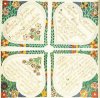
A first-time show exhibitor, Jon Eric Riis of Atlanta, Georgia, is a tapestry artist whose work is in major public and private collections including the Metropolitan Museum of Art in Manhattan. With this opulent jacket—those are hundreds of pearls—using traditional and contemporary imagery, he crafted a stunning visual, priced at $50,000.

Downtown Gallery, Los Angeles and New York, featured a rare pair of hand and foot chairs by Mexican surrealist Pedro Friede- berg (b. 1936). In white with gold/silver leaf and walnut (retaining their original gilt finish) and signed 1963, they were tagged $48,000 for the pair. Friedeberg was prolific in the 1960’s, and his creations are in the collections of museums throughout the world. A large book of his work has been published.

Hayden & Fandetta Rare Books, New York City, sold mostly to people interested in decorative art books. Believe it or not, there is always interest in cookbooks as well––even at an art and antiques show. It’s not a surprise that the cookbooks have artists’ renderings.

A five-year veteran of this show, Tony Kitz of Tony Kitz Gallery, San Francisco, displays every imaginable color of carpets. He said that compared with previous years, more people appeared interested in newer pieces, carpets that went with mid-century modern furniture and contemporary interiors. The traditional carpets, which go with every type of furnishing, are not preferred by designers. The show provided busy and quiet days for Kitz.

J.R Richards Asian Art, Los Angeles, exhibited this large lithograph by Wang Guangyi, a contemporary Chinese artist. Wang, known for being the leader of the new art movement that erupted in China after 1989, uses images similar to propaganda from the Chinese revolution. This print was $5400. The pair of earth spirits from the Tang Dynasty (618-907) was priced at $20,000.

This elegant Danish silver coffee and tea set, with sugar and creamer and American oak handles, was designed by Henning Koppel, circa 1950, for the Georg Jensen Company. Displayed in the booth by Gregory Pepin of Danish Silver, Copenhagen, Denmark, it was priced at $25,000.

Los Angeles, California

by Blanche Moss

Photos by Rona Berns

The name of the show changed, becoming the Los Angeles Antiques Art + Design Show. Some dealers changed. The crowd changed, and I do mean crowd. The spring show moved to the fall, October 11-14, 2012, enabling dealers who came to Los Angeles to go on to the San Francisco Fall Antiques Show.

Over a thousand attended opening night festivities on the evening of October 10. The opening night party benefited the Decorative Arts and Design Council of the Los Angeles County Museum of Art (LACMA). The first hour, as expected, everyone was chatting, checking each other out, sipping cocktails, and feasting on delicious hors d’oeuvres. The difference from other opening nights was that these people were art mavens. Later in the evening, they filled the aisles to peruse the offerings and make purchases.

“I am thrilled that we brought together collectors, dealers, designers, architects, curators, and scholars to support the show,” said Oliver M. Furth, chair of the Decorative Arts and Design Council of LACMA.

The council honored Joel Chen, a renowned antiquarian. Born in Shanghai and raised in Hong Kong and Los Angeles, Chen is an arbiter of taste and a design connoisseur. He has promoted classic 20th-century designers such as Charles and Ray Eames and Jean Prouvé, along with introducing cutting-edge work by other contemporary designers to new audiences.

In Los Angeles, since star power makes the world go around, having well-known celebrities Ellen DeGeneres and Diane Keaton as part of the host committee helped give the event a generous dollop of chic. A show needs more than star power to make it successful, however. Vetting committees, hard at work before opening night, shepherded by Sally Gould Wright, made buyers more confident of the quality and legitimacy of the goods being sold.

Dealers were in agreement that adding design of the 20th and 21st centuries brought in a more diverse crowd. Buyers could go on a journey through the centuries, from ancient Chinese ceramics to a Picasso vase. Although business seemed to have picked up from previous years, what was interesting to Robert Willson, a cochairperson of the show, were the good sales among the traditional antiques dealers. In contrast, collectors of American furniture and folk art Brenda and Ken Fritz, whose collection of American folk art was sold at auction several years ago, wondered if it were worth driving to a show to see only one or two folk art dealers. But for their friend Paula Rosen, a jewelry designer who joined them on opening night and who works out of New York and Los Angeles, there was much fine jewelry to discover.

Among the few dealers in folk art, Michael J. Ogle and Diana Douglas of American Garage in Los Angeles have consistently done well at this venue. They had a banner show and sold a broad range of pieces: carnival signs from the 1930’s; early American weathervanes; and carved folk art. Their buyers were hard-core collectors, as well as some others with a good eye for wall art. Would more folk art dealers on the floor diminish their sales, or bring in more interested collectors? The answer to that question falls under quien sabe.

Daniel Stein was a cochair of this event and is president of the Antiques Dealers Association of California. Stein deals in 19th-century English and Continental furniture and had a very productive show, even better than in 2011. Early on, red dots appeared in his booth on furniture, a number of paintings, and accessories. Sales this time, said Stein, were to new, rather than old, clients; and he sold to designers and private collectors. Young people were buying traditional furniture, which gave him a ray of hope. He reiterated that the new charity, the Decorative Arts and Design Council, brought in knowledgeable and sophisticated people, proving that it’s not just about numbers.

The cochairs of the show, Robert Willson, Laurent Rebuffel, Kim Alexandriuk, and Daniel Stein, ran with the notion that change was necessary to keep the show fresh, not turning it into yesterday’s antiques show. There was a good deal of traditional merchandise however, mixed with mid-century pieces and brand new designs, as was indicated by the show’s new title.

Bonnie Grossman of the Ames Gallery, Berkeley, California, is a veteran dealer who explores the many variations in folk art. Her booth contained, among other pieces, the only Outsider art in the show. She seems to enjoy the camaraderie that a show brings, and her sales were a little bit better than in 2011.

If you craved something you’d never seen before, Jon Eric Riis offered an intriguing range. He’s a contemporary tapestry artist, teacher, and textile dealer who lives in Atlanta, Georgia. His booth dazzled the eye with stunning visual works. He pushed the historically early art of tapestry weaving, with old Russian and Chinese influences, into modern, contemporary expression. Shown in major museums around the world, his work exemplifies what the show was trying to do by bringing in museum-quality contemporary works of art. Awarded a Fulbright scholarship early in his career for his studies in India, Riis was one of the founders of the Museum of Design Atlanta.

“Dealers are now into what will sell,” complained one veteran exhibitor, who asked to remain anonymous. That dealer added that decorators make much more money when clients buy new pieces of furniture. In her opinion, decorators are the consultants here, choosing 20th-century pieces rather than antiques that have a history to them, and Los Angeles is known as a decorator town. History is what happened five minutes ago.

Being challenged by an ailing economy, dealers at times seem to be pushing against impossible odds, but deservedly this show is here to stay, possibility thriving on diversity and exuding universal appeal. What could have been a discordant show came together, and at the end of the show most people were willing to say they would return.

For more information, contact Dolphin Promotions via the Web site (www.dolphinfairs.com) or call (954) 563-6747.

Impressive and hard to miss at 12' tall was this yellow sculpture made of welded half-inch thick steel by Betty Gold (b. 1935). Gold, who has studios in Venice, California, and Majorca, Spain, uses architectural paper for her patterns. In the booth of Michael H. Lord Gallery, Palm Springs, California, this one was priced at $110,000.

This colorful wall hanging looks like a quilt, but it is not a quilt in the traditional sense. The artist, Don Morris, who lives in Rancho Santa Fe, California, uses small pieces of comic books by folding them in different shapes so that the light plays on the highly textured angles. Archival glue and a fixative hold the papers firmly in place. This one, 72" x 48" and tagged $8750, was exhibited in the booth of Michael H. Lord Gallery, Palm Springs, California.


Originally published in the February 2013 issue of Maine Antique Digest. © 2013 Maine Antique Digest

comments powered by Disqus