










See All Ads

Overflow Crowd, Strong Prices Prevail at Labor Day Weekend Auction

David Hewett | November 14th, 2012

The 20" x 24" oil on masonite by Eric Sloane (1905-1985) depicting a church in Grafton, Vermont, sold for $9350 to either an absentee or a phone bidder.

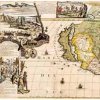
The 1775 map of The Seat of the War in New England by an American Volunteer is the work of Robert Sayer and John Bennett. It measures 18½" x 22" and sold for $22,000 to one phone bidder who took all of the best maps in the Dr. Malcolm Seymour collection.

The 64" high x 50" wide walnut cabinet of drawers with a drop-front desk over two doors may be Italian. It appealed to several bidders, and one of them on the phone won it at $11,550.

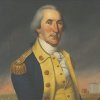
Horace Bundy (1814-1883) painted this 30" x 28" portrait of Ellen Delight, daughter of Elizabeth and Horace Hatch. The inscription on the reverse reads, "H. Bundy painted Lebanon, NH 1848." Bundy was living in Springfield, Vermont, at that date and traveling throughout Vermont, New Hampshire, and Massachusetts accepting portrait commissions. A phone bidder got it for $11,000.

William A. Smith Inc., Plainfield, New Hampshire

by David Hewett

Photos courtesy William A. Smith

If you want a break from the pattern set by the average auction in New England, you should attend one of Bill Smith's special holiday sales in Plainfield, New Hampshire.

The holiday tradition was started by the firm's founder, William Smith (1942-2000), and is continued by his son, William Smith. Everyone who is familiar with the auction house thinks of it as Bill Smith's.

The Labor Day and Memorial Day weekend auctions are special. They're two-day events with over a thousand lots crossing the block. Only two auctioneers sell inside the Plainfield complex, Bill Smith and Kenny Labnon, and they are good and fast.

What's out of the ordinary for the semiannual special events at Bill Smith's? In brief, two words: retail buyers.

Smith's draws a retail crowd that has to be experienced to be believed. The Upper Valley towns around Plainfield include Quechee, Woodstock, and Wilder in Vermont, and Hanover, Lebanon, and other affluent communities in New Hampshire. The area includes the Dartmouth College community and its spin-off of medical specialists at Dartmouth-Hitchcock Medical Center, and a large number of second-home owners and retirees live within a 50-mile circle around Plainfield. Many of them were squeezed into Bill Smith's gallery on September 2 and 3.

Smith's charges a low 10% buyer's premium, and there is no computer bidding, just bidding from the floor, bids left with the auction house, and telephone bids. Smith admitted that if he could have his druthers, there would be no more of the latter.

The telephone bidding does slow the sale at times (slow at Smith's means 60 to 65 lots per hour), and the disgruntled phone bidder who misses out because his phone service drops out and someone else takes the prize can complain to the point of an employee's halting the sale and asking the auctioneer to make a ruling on the matter, but it also permits someone on the road to chase a treasure. For example, New Hampshire dealer Tom Longacre bought a painted country piece from "somewhere on the Jersey Turnpike" while returning from exhibiting at the York (Pennsylvania) Antiques Show & Sale, he reported when we ran into him at a Vermont farm stand later on Monday afternoon.

Smith's September 2 session, held Sunday afternoon from 3 to 6 p.m., included American coins (a telephone bidder paid $1595 each, including buyer's premium, for Liberty double eagle $20 gold pieces from the years 1878, 1883, and 1904), rare books and maps, firearms, and prints. It was a most successful event. Smith ripped through 50 lots of coins in just inside of a half-hour, the guns took a bit longer, and the competition for almanacs and maps was fierce.

There's an interesting story behind those latter items. They were collected by Dr. Malcolm Seymour early in the 20th century while he was working at a paper mill in Holyoke, Massachusetts. They were part of the tons of paper stock destined for pulping when he rescued them from that fate.

One of those maps was a genuine treasure. Dr. Seymour had the 1816 Map of the United States with the contiguous British & Spanish Possessions Compiled from the latest & best Authorities by John Melish framed under glass. That map exists in several states (the Library of Congress identifies 24 versions issued between 1816 and 1823), but with its initial publication in 1816, it became what some collectors hail as the single-most important and influential map of America of its time. It was "so accurate that it was used in several treaty negotiations to determine boundaries" (Crossroads of Empire, Amon Carter Museum, 1981). The last auction record we could find was at Cowan's in 2005, where a fifth state copy brought $47,725.

The phone bidder who claimed the Melish map at $74,250 also took the 1775 map by Robert Sayer and John Bennett of The Seat of the War in New England by an American Volunteer for $22,000, plus four other maps at prices ranging from $209 to $3575.

There probably were some decent buys among the book lots that were grouped in lots assembled on a single theme. These included, for example, 16 assorted works on fox hunting for $110, and six mixed volumes on whaling and model boat building, which we bought for our reference library, paying $110.

One book, however, stood out from the rest. Scenery, Costumes and Architecture chiefly on the Western Side of India (1830) by Robert Melville Grindlay went at $9350 to a phone bidder after spirited bidding (a copy sold by Christie's in London in 2009 brought $15,488).

Grindlay's Scenery, Costumes and Architecture… comprises six parts bound in one volume with 36 hand-colored aquatint plates on thick paper by various engravers. Described as the second-most attractive color plate book on India, it is one of the few books in which the colorist (J.B. Hogarth) is mentioned.

Labor Day, Monday, September 3, was definitely a workday for Smith and Labnon, and particularly for the runners. Although each lot is shown on video screens, the runners still bring almost everything offered to the podium for viewing by the auctioneer and the crowd. That includes many big and bulky pieces of case furniture and large Oriental carpets. Even with those slowdowns, Smith and Labnon still sold between 70 and 80 lots an hour.

The art sold on Monday included a 30" x 28" portrait by Horace Bundy of Ellen Delight, daughter of Elizabeth and Horace Hatch. Painted in Lebanon, New Hampshire, in 1848, it sold for $11,000. All they could get for the portrait of Ellen's mother, though, was $715.

A 20" x 24" oil on masonite by Eric Sloane of a church in Grafton, Vermont, sold for $9350. Jack Gray's 30" x 50" oil painting of the West Ridge of Newfoundland Banks, which had cost $12,500 in 1970, brought $49,500 this time around.

It was a strong sale for the Smith crew. For more information, contact Smith at (603) 675-2549; Web site (www.wsmithauction.com).

The 60" high x 38" wide Pennsylvania tall chest in walnut sold for $3850—a decent price for a very clean piece.

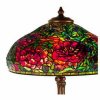
The Tiffany Studios counterbalanced floor lamp is signed on the base and has a 10" diameter green and gold glass shade signed "LCT Favrile." A phone bidder claimed it at $14,300.

Dr. Seymour also collected books that had the maps intact, such as this 1721 A New General Atlas, containing a Geographical and Historical Account of all the Empires, Kingdoms, and other Dominions of the World by John Senex. It sold for $5500.

The 94" Federal mahogany tall clock from the Appell estate in Hanover, New Hampshire, has lots of good inlay work, such as stars on the tympanum and bookends under the bonnet, along with painted spandrels on the dial, reeded quarter columns, and French feet. All point to quality work by a New York City maker. A phone bidder chased it to $10,175 and owned it at that price.


Originally published in the November 2012 issue of Maine Antique Digest. © 2012 Maine Antique Digest
comments powered by Disqus